Compliance with the STCW, MARPOL, SOLAS and the MLC, the four ‘pillars’ of maritime safety legislation, is mandatory. According to the ISM Code the Company/ship should have procedures for the provisions of training in support of the Safety Management System (SMS).
A flag state will exercise control by regulating the certification process, the training and education of seafarers, and by assessing the competence of seafarers prior to certification.
A port state exercises control by inspecting ships calling at their ports. The convention requires port state authorities to inspect ship calling at any of their ports and inspectors are authorized to verify that seafarers’ certificates for the functions they perform, the manning level requirements, and the seafarers are competent in their watchkeeping, safety, and pollution prevention duties. If there is a reason to believe that standards are not being maintained, the inspector is entitled to assess the ability of seafarers to maintain watch-keeping standards.
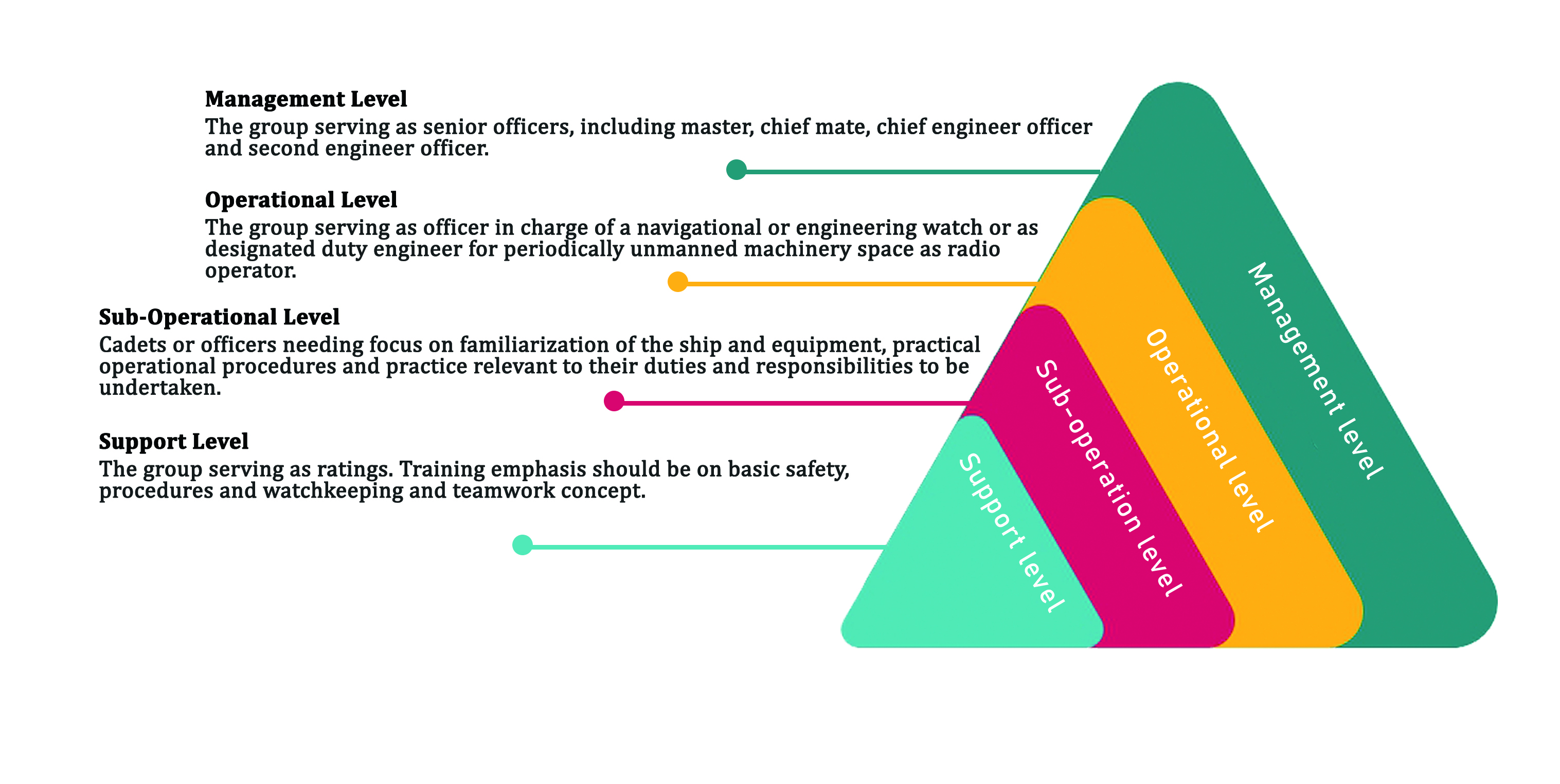
One should identify different groups before training. It is known that there are three levels of seafarers stated in the STCW 95, namely management, operational and support.
Shipboard Functional Approach to onboard Training
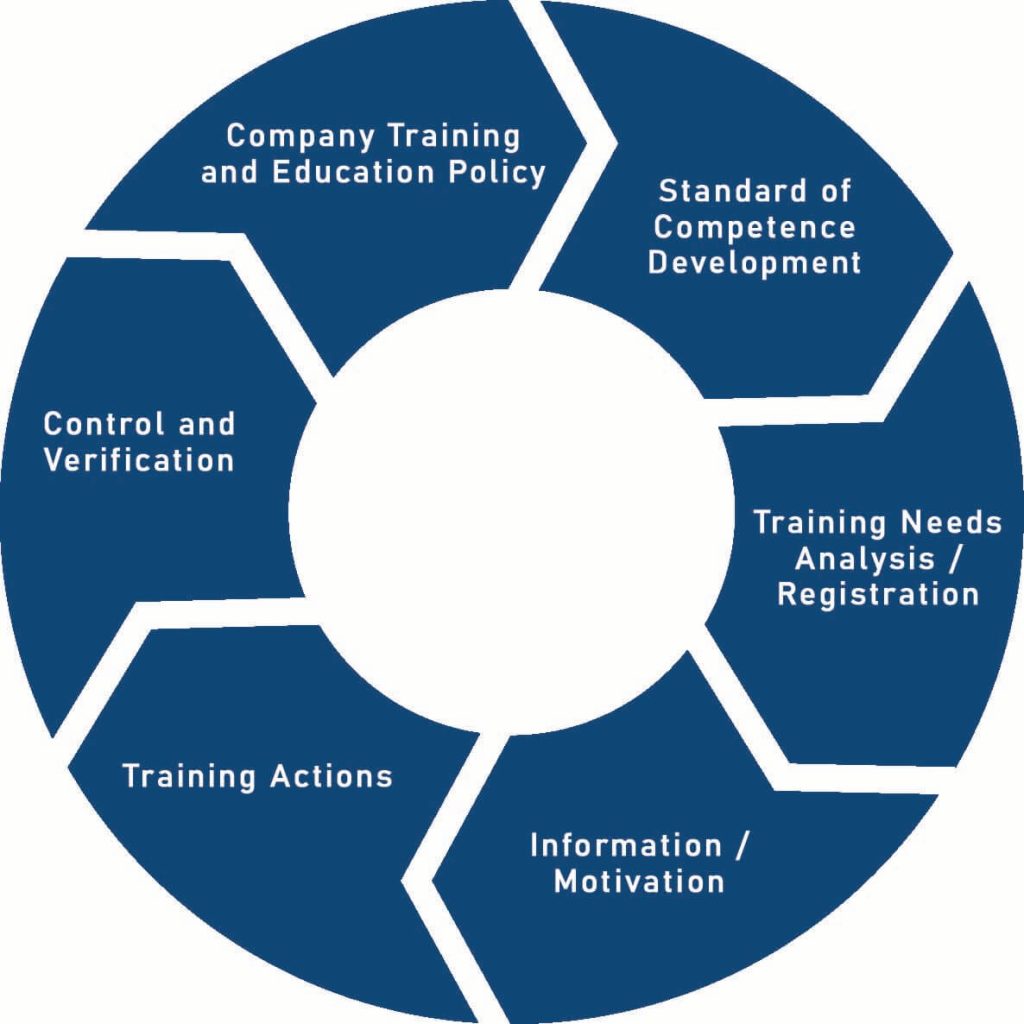
The Company may choose to use a training matrix to establish the training or competence requirements for its shipboard personnel with records and document, the identification of training needs and the delivery of training provided. The functional approach in on-board training will identify areas of strength and weakness in an individual seafarer, provide him with necessary on-board knowledge and skills development and provide him with a “benchmark” matrix of competencies that may help in his performance appraisal for the next rank for a promotion.
With the continual application of higher technology on board, the complexity of handling larger and more powerful ships, and the inevitable shift to a smaller crew and multinational crewing, the shipboard training matrix is an essential component in meeting all the safety and environmental regulations and personal safety in evidence and in spirit, and a signature of a learning organization on board and ashore.
Explore our Shipboard/Organizational Training
These courses focus on company-wide safety, compliance, and operational standards, helping shipping firms implement training matrices, meet ISM/ ISM code requirements, and close skill gaps across entire crews
Learn smarter, not harder. Our approach combines innovation, flexibility, and support to help you achieve more with less stress—wherever you are in your learning journey.
Flexible Learning
Learn at your own pace with modular course structure
Certified Training
Earn internationally recognized credentials
Expert-Led
Training delivered by maritime industry experts
Seafarer certification
At mariner skills,Professionals combine to compile
Online Mariner Skills
Are you a mariner enrolled in a USCG-approved STCW course or an ABS-approved Professional Development course? Scan this QR code to download the App for your iOS or Android device.
Beacon
Are you a mariner enrolled in your competency-driven corporate training? Scan this QR code to download the App for your iOS or Android device.